Addresses
Type of place
Powerhouse
Period
World War I 1914-1918
Style
Stripped Classical
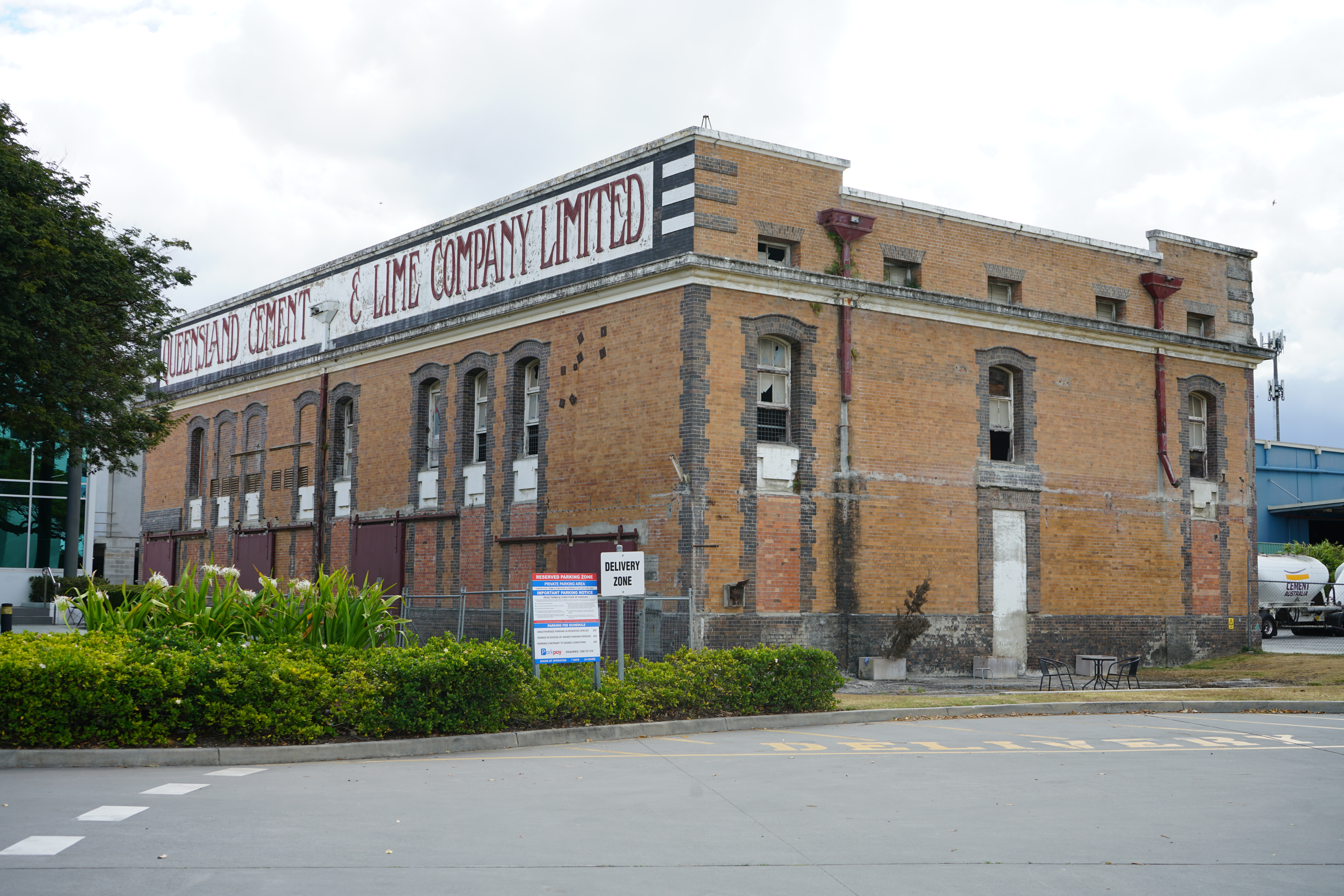

This is an image of the local heritage place known as Queensland Cement and Lime Company Powerhouse (former), 16 Station Avenue, Darra.
Queensland Cement and Lime Company Powerhouse (former)
Addresses
Type of place
Powerhouse
Period
World War I 1914-1918
Style
Stripped Classical
The Queensland Cement and Lime Company was established in 1914 to supply locally manufactured cement. The company provided employment for local residents and supplied cement for many major building works in Queensland. The brick Stripped Classical style powerhouse building, built during the First World War, remains on the site and is an important reminder of the major contributions made by the company to many large-scale building projects in the 20th Century and to the city’s evolution.
Also known as
Darra Cement Works
Lot plan
L204_SP328589
Key dates
Local Heritage Place Since —
Date of Citation —
Construction
Walls: Face brickCriterion for listing
(A) Historical; (E) AestheticInteractive mapping
Also known as
Darra Cement Works
Lot plan
L204_SP328589
Key dates
Local Heritage Place Since —
Date of Citation —
Construction
Walls: Face brickCriterion for listing
(A) Historical; (E) AestheticInteractive mapping
History
Darra’s development was influenced by the railway, and it became a key industrial area of Brisbane. By 1914, a post office had been established at Darra, and a primary school opened in 1915 reflecting the increased population. Several large industries moved into Darra in the late 19th and early 20th Centuries, in particular Brittain’s Brickworks and the Queensland Cement and Lime Company.
The Queensland Cement and Lime Company was established in 1914. In the early 20th Century a consensus was reached between a group of Brisbane business leaders that highlighted the genuine need for a cement industry in Brisbane. They were described in 1921 as ‘men of vision, who see what our resources are capable of, and men of daring initiative and enterprise, who are not afraid to back up their opinions with their capital. Queensland owes much to such men’.
Before this, the majority of cement used in Queensland was imported, mostly from Germany and Hong Kong, making it expensive and delivery unreliable. Investors were sought and, on 2 June 1914, the Queensland Cement and Lime Company Limited was incorporated. J. W. Hetherington, Mayor of the City of Brisbane (1910 and 1916--1917) and Managing Director of Blair Athol Company Ltd and Hetherington and Rylance Ltd, chaired the first Board of Directors. The Board was made up of many of Brisbane’s most prominent businessmen and politicians.
The location of the Darra plant was chosen for several reasons; it was away from residential areas, close to the railway, had its own shale, sand and clay deposits that were used in production and was near the Ipswich coal fields. Limestone deposits, an important ingredient in cement manufacture at this time, were mined at Gore, outside Warwick, and then transported by rail to the Darra plant.
The outbreak of the First World War caused numerous problems for the newly established company, including increased building expenses for the plant. A tender for the design of the powerhouse building was advertised in March 1916. The building was completed and fully operational by 1917, including the powerhouse. A 1917 plan of the site shows the factory as it was when it opened; including the first single kiln, two cement silos, two triple mixers, a raw mill, a coal and cement mill, a brick industrial chimney, an office and laboratory. It also shows the location of the boiler house and the engine room, both of which were located in the powerhouse. A railway siding extended from the main Ipswich line through the site.
Electricity in Brisbane was still a new technology in this period, with only the Central Business District and Fortitude Valley on the electricity grid. The board of the Queensland Cement and Lime Company realised the need for an efficient electricity supply for the factory and, being so far from the inner-city supply, felt it essential to install a fully functioning power station on site to generate this power. They decided to import the best plant machinery from Great Britain through a contract with Noyes Brothers of Sydney. All instruments and mechanics, including transformers, were imported. The Brisbane Courier reported in 1916, as the factory was being constructed, ‘…the power station, like the other buildings, is being made capacious enough to permit of the duplication of the plant as soon as trade conditions warrant the expense’. However, as Brisbane's electricity supply improved and expanded throughout the city, by 1921 the factory was being powered by the City Electric Light Company as it was more efficient than generating its own power.
By the early 1920s, the quality of the cement produced at the Darra factory was some of the highest in Australia. The Brisbane Courier wrote in 1921, ‘the Darra cement has been tested by the Department of Public Works and found to exceed the Government specifications both in tensile strength and in connection with the sand test […] It is evident that no effort is spared by the management to ensure the high quality of the product'.
As the Queensland Cement and Lime Company became increasingly successful, the factory expanded to meet demand. In 1920-21, a second kiln was constructed, along with two more mills. The factory at Darra continued to expand between the First and Second World Wars, with a third kiln commissioned in 1939 that doubled the factory's capacity. A new office building and laboratory were also constructed in 1939.
An important advancement for the Darra factory was moving away from using limestone in cement manufacture. By the 1930s, the Gore limestone stocks had been depleted considerably. A new source of lime was sought and, after extensive research and testing at the plant, an alternative was found. The calcium carbonate found in dead coral was like that found in limestone. Dredging in Moreton Bay for dead coral to be used in the Darra factory began in 1937. The coral was dredged by a small fleet of dredging vessels, mainly at Mud Island. Initially, the coral was shipped to the Stanley Street wharves at South Brisbane and trucked to Darra. However, in July 1937 the Oxley Wharf at Darra was completed. All coral was delivered to the wharf on the Brisbane River and trucked to the factory only 3.5 kilometres from the wharf. The quality of the cement improved, and the price was reduced.
The company’s connection to the Brisbane River also strengthened in the 1960s with the construction of a conveyor belt stretching from Oxley Wharf to the Darra cement factory. This was a major advancement for the factory, as the belt could transport 4-500 tonnes of crushed coral per hour directly into the factory for processing, cutting costs on petrol, trucks, and drivers.
The Queensland Cement and Lime Company was one of two major employers in the Darra district throughout the 20th Century, the other being Brittain’s Brickworks. Significantly, the cement factory was an employer to many immigrants to Australia, particularly in the post-war period. Throughout its history, the Queensland Cement and Lime Company provided cement for building projects including Brisbane City Hall, the McWhirter’s & Sons Building in Fortitude Valley and New Farm Powerhouse.
Description
The former Queensland Cement and Lime Company powerhouse is a large two-storey First World War-era building in the Stripped Classical style in the industrial precinct of Darra, off Westlink Court behind Station Avenue.
Key features of the building are its stripped-back classical detailing with red face brick facades with contrasting dark brick coining, and large multi-pane sash windows set within regularly spaced segmental arched openings. Constructed on a steel frame with load-bearing brick walls allowing for large internal spans, the building has a utilitarian form with strong masonry construction, prominent cornice, dark brick detailing to the lower courses, arched openings and substantial parapet. The prominent parapet retains painted ‘Queensland Cement & Lime Company’ signage. Original cargo doors remain at ground level. A remnant railway line can be found outside the front of the building.
The building’s material, form, openings and scale reflect its original use as a First World War era powerhouse and remains a distinctive landmark.
Significant features
Features of cultural heritage significance include:
- Form: Large two-storey rectangular industrial building with a low-pitched roof concealed behind a prominent parapet, with regular structural bays and a substantial scale and massing characteristic of early 20th Century industrial architecture.
- Structure:
- Structural system: steel-frame with load-bearing brick walls
- Roof: low-pitched corrugated sheet metal roof concealed behind a brick parapet
- Walls: red face brick construction with contrasting dark brick detailing to lower courses, corners and arched openings
- Openings: segmental arched multi-pane sash windows and large cargo door openings.
- Key features and elements:
- Original painted Queensland Cement & Lime Company signage to the parapet
- Rendered cornice below the parapet
- All original door and window openings, including segmental arched window openings with contrasting dark brick detailing, multi-pane industrial sash windows with decorative sills, large sliding cargo door openings
- Contrasting dark brick detailing to the base brick courses and coining corners
- Remnant railway track line outside the front of the building.
- Setting: Views to and from the building from Westlink Court and Station Avenue.
Heritage curtilage
The heritage curtilage captures all significant features of the place as described and consists of lot 204, SP328589.
Statement of significance
Relevant assessment criteria
This is a place of local heritage significance and meets one or more of the local heritage criteria under the Heritage planning scheme policy of the Brisbane City Plan 2014. It is significant because:
Supporting images
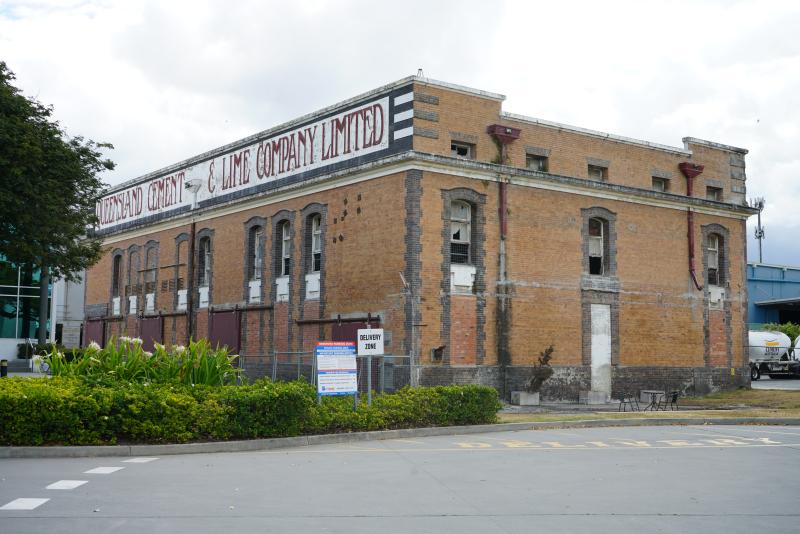
Three quarter view of the Queensland Cement and Lime Company powerhouse (former).
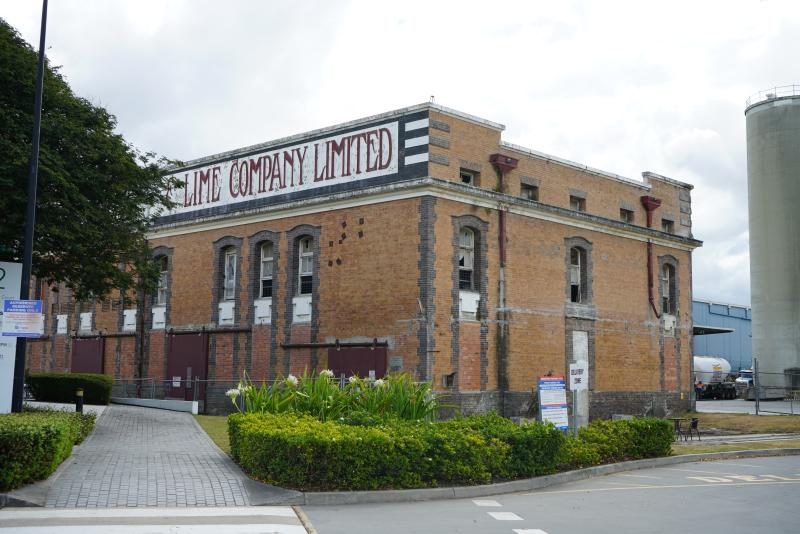
Three quarter view of the Queensland Cement and Lime Company powerhouse (former).
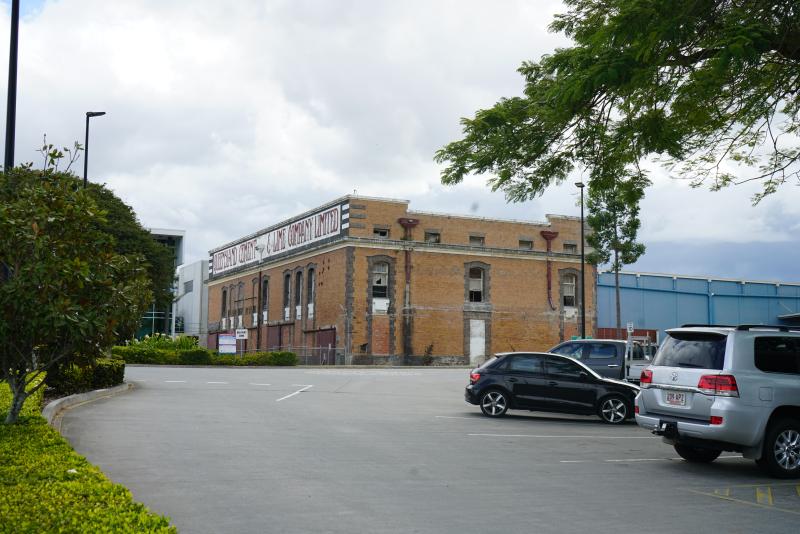
Three quarter view of the Queensland Cement and Lime Company powerhouse (former).
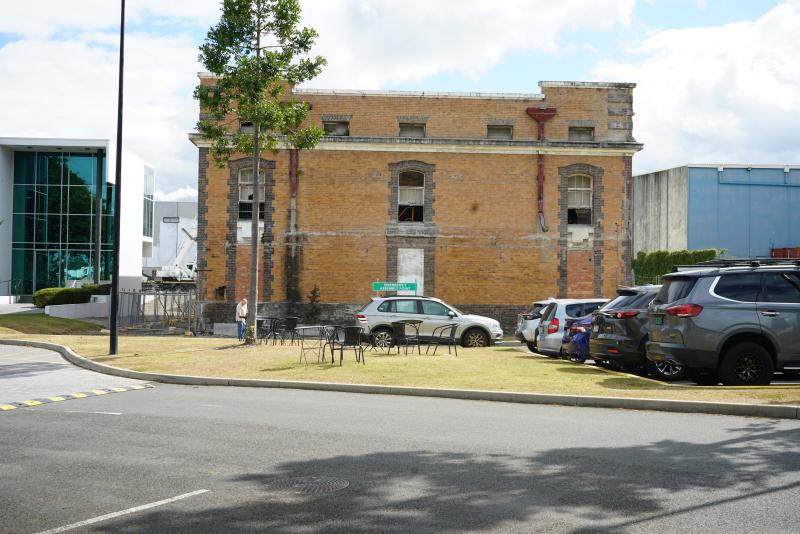
Frontal view of the Queensland Cement and Lime Company powerhouse (former).
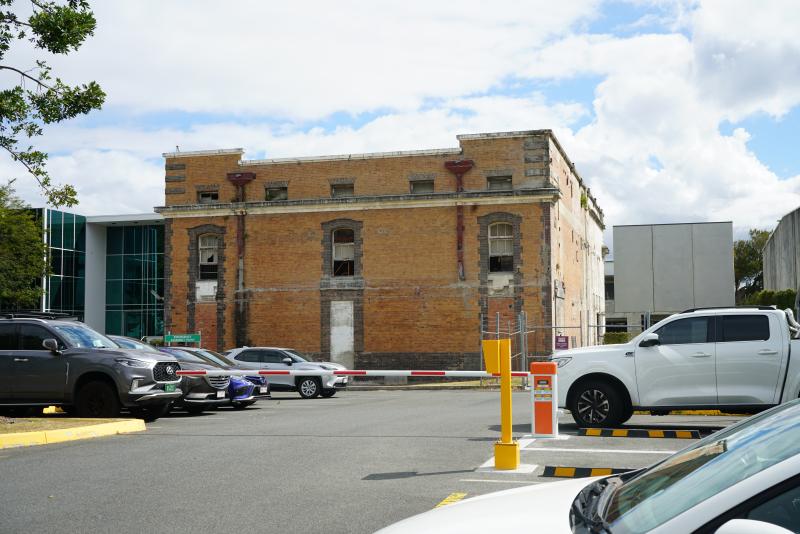
Three quarter view of the Queensland Cement and Lime Company powerhouse (former).
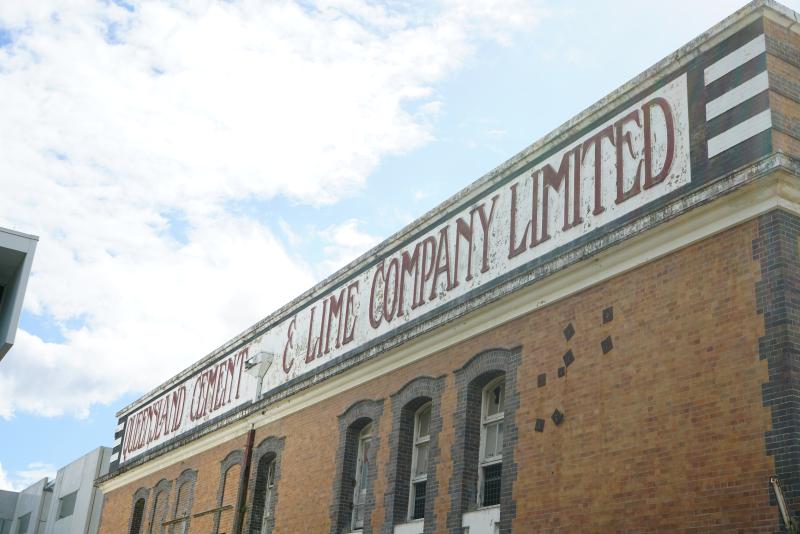
Original painted ‘Queensland Cement & Lime Company’ signage to the parapet.
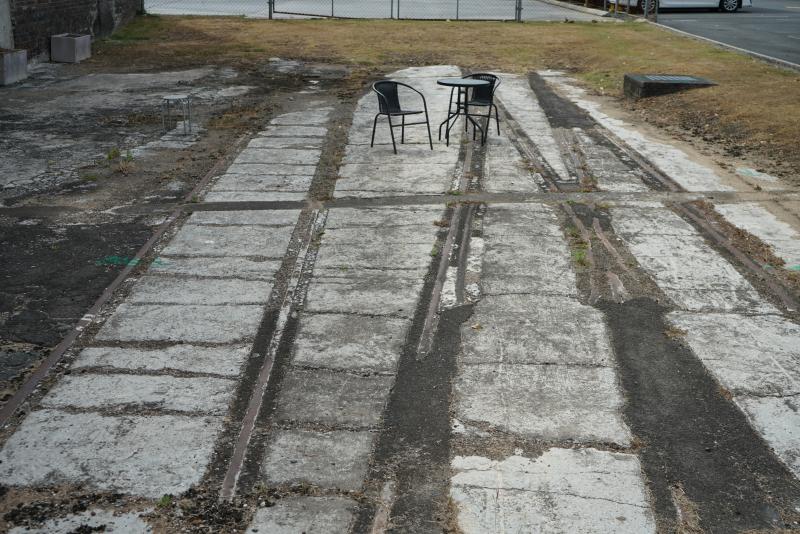
Remnant railway track line outside the front of the building.
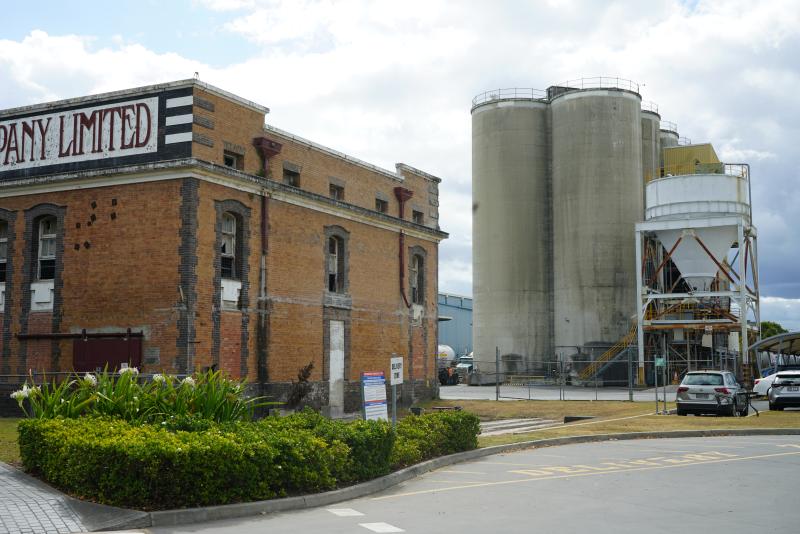
Front three quarter view of the former powerhouse with the modern cement factory in the background.
Supporting documents
Citation prepared by — Brisbane City Council (page revised September 2026)